What Getting Ignored Actually Taught Me About Why I Create
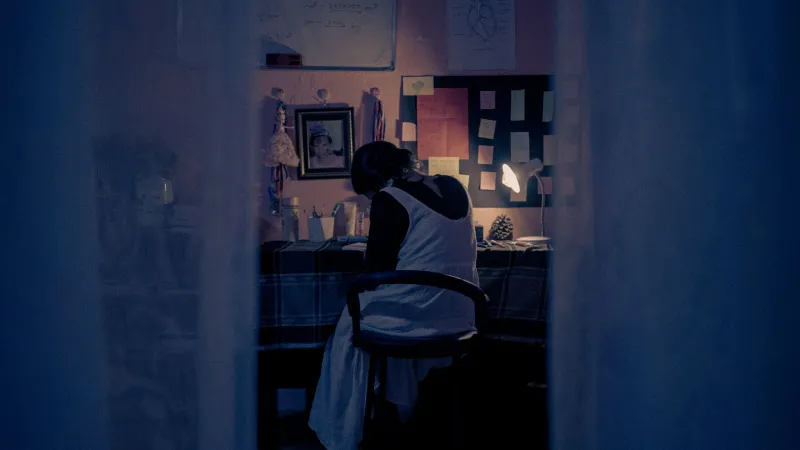
I remember the exact feeling of watching the numbers drop. Not dramatically — it wasn't some spectacular crash. It was more like a slow exhale. Fewer views, fewer comments, fewer people tagging me in things or sliding into my DMs to say hey, I saw what you made. The silence came in gradually, the way a room empties out after a party winds down. And at first, honestly? I panicked.
But here's the thing nobody warns you about: being forgotten might be the most clarifying experience a creative person can go through.
The Performance You Don't Know You're Giving
When people are watching, you adjust. It's not always conscious — that's the sneaky part. You tell yourself you're making exactly what you want to make, that you're not chasing anything, that the audience is just along for the ride. But then the audience shifts, or shrinks, or goes quiet, and suddenly you're staring at a blank page with no invisible crowd to perform for.
And that's when you find out what you actually want to say.
I didn't realize how much of my creative energy had been quietly shaped by external feedback until that feedback mostly stopped coming. Not all of it — but enough that the noise died down. Enough that I could hear myself think. And what I thought, sitting in that unfamiliar quiet, was: wait, do I even like making this?
For some of the stuff I was putting out, the honest answer was no. I'd been making it because it performed. Because it got responses. Because people shared it and that felt like proof that I was doing something right. But stripped of all that, some of it felt hollow. Like a joke I'd told so many times I'd forgotten why it was funny.
Pressure Is a Weird Kind of Fuel
Here's what nobody talks about enough: audience pressure is genuinely motivating. I'm not going to pretend it isn't. When people are expecting something from you, you show up. You finish things. You hit publish even when you're not sure it's ready, because the alternative is disappointing people who are actually waiting.
But motivation and meaning aren't the same thing.
Pressure gets you to the finish line. It does not tell you whether the race was worth running. And when the pressure lifted — when I realized nobody was sitting around refreshing a page waiting for my next thing — I had to find a completely different reason to keep going. Or decide not to.
That fork in the road is where the real work happens.
What I Started Making When Nobody Was Watching
I made weird stuff. Stuff I would have talked myself out of if I'd been thinking about an audience. A piece that was too long and too personal and didn't have a clean takeaway. A project that didn't fit neatly into any category I'd been operating in. Something that felt more like thinking out loud than producing content.
And I loved making it. Like, genuinely — the kind of love that doesn't need validation to sustain itself.
That was new information. Because a lot of what I'd been doing before felt good after it landed well. The satisfaction was downstream of the reception. But this stuff felt good in the making, regardless of what happened next. That's a different relationship with your own work, and once you've felt it, you can't unfeel it.
The Ego Math Nobody Talks About
There's an ego math that happens when you have an audience, and it runs quietly in the background of almost every decision you make. Will this land? Will people get it? Will this grow what I've built, or chip away at it?
Lose the audience, and that math stops. You're not solving for reception anymore. You're just making the thing.
I'm not romanticizing obscurity here — I'm not going to pretend that visibility doesn't matter or that building an audience isn't a real and valuable thing. It is. But there's a specific kind of creative freedom that only becomes available when the stakes drop. When you're not protecting something. When a flop is just a flop and not a crisis.
That freedom taught me more about my actual creative instincts than years of making things for an audience ever had.
Coming Back to an Audience With Different Eyes
Eventually, things shifted again. Some of the work I made in that quiet period found its way to people. Not because I optimized it or pushed it harder — just because it was more honest, and honest things tend to travel on their own timeline.
But I came back to the idea of an audience differently. Less hungry. Less dependent on the feedback loop. More interested in making things I'd want to exist in the world even if they never found a crowd.
That sounds like a small shift. It isn't. It changes everything about how you make decisions, what you're willing to try, and how you handle the inevitable moments when something you care about doesn't connect the way you hoped.
The Counterintuitive Gift
If you're in a season where the audience has thinned — where it feels like you're making things into a void — I'm not going to tell you it doesn't sting. It does. The silence is genuinely uncomfortable, especially if you've built your creative identity around the response.
But I will tell you this: something useful lives inside that discomfort. A question you can only hear clearly when the noise has died down. Why are you actually doing this?
The answer you come up with — when nobody's clapping, when no algorithm is rewarding you, when the only person in the room is you — that answer is the most honest thing you'll ever know about yourself as a creative person.
And it's worth more than any audience you'll ever grow.