When Your Audience Is Still Clapping for Someone You've Already Outgrown
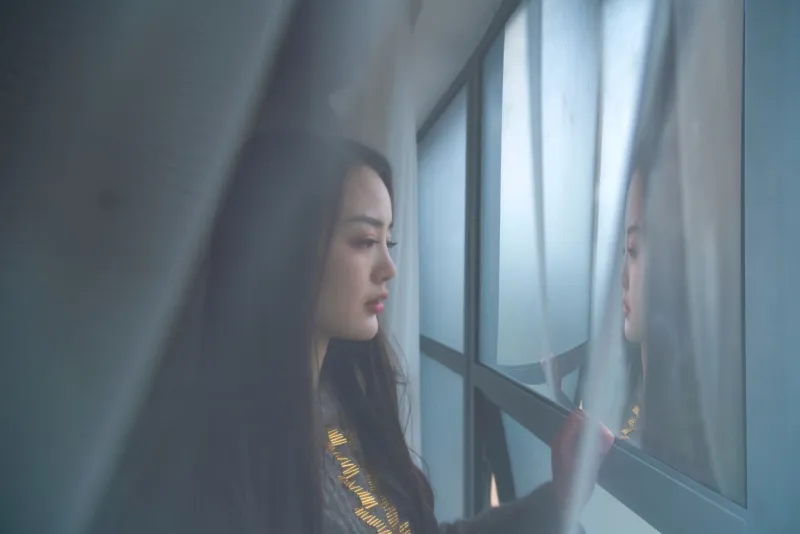
There's a specific kind of loneliness that hits when people celebrate a version of you that no longer exists. It's not invisibility — it's almost worse. It's being seen, loudly, for all the wrong things.
You smile when they bring it up. You say thank you. You maybe even laugh a little, because what else are you going to do? But inside, something quietly aches. Because the thing they're praising? You left it behind a while ago. And nobody noticed.
The Box Gets Built Without Your Permission
Here's how it usually starts: you do one thing really well, or you share one part of yourself really openly, and people respond. They connect with it. They tag you in it. They introduce you as the person who does that thing. And at first, it feels amazing — because being known for something is better than being known for nothing, right?
But identity has a way of calcifying in other people's minds. The more they associate you with that one thing, the harder it becomes to be anything else — at least in their eyes. You didn't build the box. You didn't ask to live in it. But there you are, and everyone around you seems pretty comfortable with the arrangement.
The problem is that you kept growing. You changed your mind, your interests, your direction. Maybe your creative work took a sharp left turn. Maybe the personal stuff you used to share freely started feeling too exposed. Maybe you just woke up one day and realized the thing everyone loved about you was actually the version of you that was most afraid — and you'd quietly done the work to stop being that person.
None of that gets announced. Growth rarely does.
Silence Isn't the Same as Lying, But It Can Feel Like It
What's strange about this particular kind of identity gap is how easy it is to stay quiet about it. You're not technically being dishonest. You're not pretending to be something you're not. You're just... letting people believe a story that's a few chapters out of date.
And the longer you stay quiet, the more that silence starts to weigh something. You stop correcting people when they describe you in ways that feel off. You let old work keep circulating without context. You answer questions about a creative phase you've already closed out, because explaining would take longer than the conversation allows.
But here's what nobody warns you about: staying silent about your evolution can feel just as isolating as being completely unseen. Maybe more so. Because you're present, you're engaged, you're there — and still, somehow, no one is actually meeting you where you are.
That's a particular kind of loneliness. The kind that lives in plain sight.
Why Other People's Narratives About You Are So Hard to Shake
People are invested in your old story for reasons that have very little to do with you. Your previous work maybe helped them through something. The version of you they first encountered felt familiar, safe, relatable. They built a relationship with that iteration — and relationships, even parasocial ones, come with expectations.
When you shift, even naturally, even healthily, it can register as a kind of betrayal to people who weren't ready for it. Not because you did anything wrong. But because they'd made you a character in their own narrative, and characters aren't supposed to rewrite themselves without warning.
This is especially true in creative spaces. If you built an audience around a specific aesthetic, a particular kind of vulnerability, a recognizable voice — and then that voice starts to change — some people will push back. They'll say you've lost it, or sold out, or gotten too big for your roots. What they're really saying is: I liked you better when you were easier to categorize.
You can't control that reaction. But you can stop letting it define what comes next.
Reclaiming Your Story Without Burning the Old One Down
Here's where a lot of people get stuck: they think reclaiming their narrative means disowning everything that came before. Like you have to reject the old work, denounce the old self, make a whole declaration about who you are now versus who you were then.
You don't.
You can honor the work that got you here without being held hostage by it. You can acknowledge that yes, that thing you made three years ago meant something — to you, to others — without agreeing to be defined by it forever. Growth doesn't require a public funeral for your past self. It just requires that you stop pretending the past is the present.
That might look like quietly letting new work lead the conversation. It might look like being more deliberate about what you put forward and what you let fade. It might, sometimes, look like saying out loud — in whatever format feels right for you — this is where I am now, and it's different from where I was, and that's okay.
Not everyone will follow you into the new chapter. Some people are genuinely only here for the old version, and that's their prerogative. But the ones who are curious about who you're actually becoming? They can't find you if you keep hiding behind the highlight reel from three years ago.
The Cost of Staying Legible to Everyone Else
There's a quiet pressure in creative life — especially when you have any kind of audience, even a small one — to stay legible. To be consistent in ways that are easy to track and easy to sell and easy to explain at a dinner party. Oh, she's the one who does X. Clean. Simple. Brandable.
But people aren't brands. Or at least, we don't have to be.
The cost of staying perfectly legible to everyone else is that you become less and less legible to yourself. You start making choices based on what fits the box rather than what actually fits you. And eventually, the distance between the public version and the private one gets so wide that you're basically living two separate lives — one for the audience, one for yourself.
That split is exhausting in a way that's hard to explain to people who haven't felt it. It's not dramatic. It doesn't look like a crisis from the outside. It just quietly drains you, day after day, until the work stops feeling like yours at all.
You're Allowed to Be Further Along Than People Expected
This is the thing I keep coming back to: you don't owe anyone a static version of yourself.
Your audience — your followers, your readers, your community, whoever shows up for your work — they are not entitled to the you that existed when they first clicked follow. You are allowed to have grown past that person. You are allowed to be doing something different, thinking differently, creating differently.
The loneliness of being known for something you're not anymore is real. I'm not going to pretend it isn't. But it's also, in a strange way, a signal. It means you moved. It means something shifted. And the discomfort of that gap? It's often the exact thing that pushes you to start closing it.
You get to introduce yourself again. As many times as it takes. As the person you actually are right now — not the person who was easiest to describe back then.