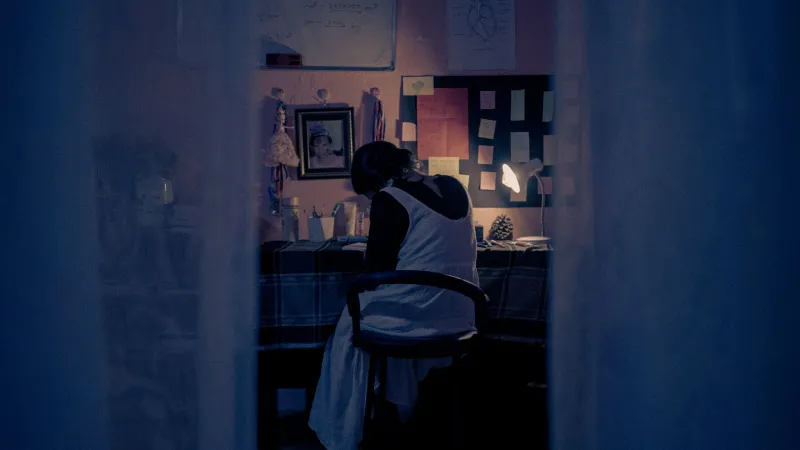
Still Famous for the Thing You Left Behind

Somewhere out there, there's a version of you that people absolutely love. They reference her in comments. They bring her up at parties. They DM you asking if she's ever coming back. The only problem? That version of you packed her bags a while ago, and you're the one who had to stay behind and explain the vacancy.
This is one of the weirder parts of putting your creative work into the world — eventually, the work takes on a life of its own. And sometimes that life runs a lot longer than your actual interest in making it.
When Your Reputation Becomes a Time Capsule
It usually starts subtly. Someone introduces you at an event using a descriptor that used to fit perfectly but now feels like a costume from three Halloweens ago. Or you get tagged in something that references your "signature style" — and you realize your signature style was something you were doing four years back, mostly because you didn't know better yet.
The tricky part is that none of this is anyone's fault. People connect with work at a specific moment in time, and that connection is real. When your old blog post or early creative project meant something to someone, that meaning doesn't expire for them just because you've evolved. You can't take that back, and honestly, you probably wouldn't want to.
But you can start to feel like a museum exhibit of yourself. Like the velvet rope is up and you're not allowed to touch anything.
The Guilt That Comes With Moving On
Here's what nobody really talks about: there's a low-grade guilt that follows you when your interests shift and your audience doesn't. You start second-guessing new directions because some part of your brain is running the math on how many people followed you for the old thing. You wonder if pivoting is somehow a betrayal of the community you built.
Spoiler: it's not. But the feeling is real enough that it slows a lot of people down.
I've talked to creators — writers, designers, photographers, small business owners — who are essentially holding themselves hostage to a past version of their work because they're afraid of disappointing people who fell in love with that version. They keep producing content they've outgrown, and then wonder why it feels hollow. The audience can feel that hollowness too, by the way. Inauthenticity has a very specific texture, and people pick up on it even when they can't name it.
What It Means to Be "Known" for Something
Being known for your work is genuinely a privilege — I want to be clear about that. In a landscape where most creative work disappears into the void without a trace, having anything stick is something worth acknowledging. But being known for one specific slice of your work, frozen at a particular moment, can start to feel less like recognition and more like a label that doesn't quite fit anymore.
The cultural shorthand we use for creative people tends to flatten them. You become "the person who does that thing" — and that thing might be something you did once, did for a season, or did while you were still figuring out what you actually wanted to make. People hold onto those associations tightly, partly because it makes you easier to file away in their mental catalog.
Reclaiming your identity from that filing system takes real, deliberate effort.
Signaling Growth Without Writing an Apology
You don't owe anyone a press release about your creative evolution. You don't need to write a long post explaining why you're not doing the old thing anymore, or issue some kind of formal announcement that the previous era has ended. That kind of over-explanation often does more harm than good — it signals that you feel guilty about changing, which can actually invite more pushback.
Instead, the shift tends to work better when you just... start showing up differently. Consistently. Without fanfare.
Share what you're actually excited about right now. Talk about what's interesting you, what you've been reading, what creative problems you're trying to solve. Let the new direction accumulate weight through repetition, not through declaration. People update their perception of you when they see enough evidence — and evidence is built by doing the work, not by announcing it.
It also helps to be genuinely warm about the old work without being held captive by it. You can acknowledge that something mattered, that it had value, that you understand why people connected with it — and still make it clear, through your actions if not your words, that you're somewhere new now. Those two things aren't in conflict.
Letting People Catch Up (Or Not)
Here's the uncomfortable truth: not everyone is going to make the journey with you. Some people followed you specifically for the old thing, and when the old thing isn't the main event anymore, they'll quietly drift. That's okay. It has to be okay, because the alternative is staying stuck in a creative phase you've already finished — which helps nobody, including the people you're trying to hold onto.
The audience that's right for where you're going is out there. They just haven't found you yet, because you've been spending all your energy maintaining a version of yourself for people who loved where you were.
There's also something kind of freeing in accepting that your reputation will always lag a little behind your reality. That gap is just the nature of being a person who keeps moving. You'll always be slightly ahead of how you're perceived, and eventually, perception catches up — or it doesn't, and you build something new with people who showed up for this chapter.
The Work You're Making Now Deserves a Fair Shot
Maybe the most practical thing you can do is stop treating your current work like it needs to justify itself against your greatest hits. Every new direction you take deserves to be evaluated on its own terms, not held up against the thing that happened to land well three years ago.
You're not obligated to keep performing a past version of yourself to make other people comfortable. Growth isn't a betrayal. Evolution isn't an apology. And the weird privilege of being known for work you don't do anymore doesn't have to become a trap — unless you let it.
You already left that version of yourself behind. The only question left is whether you're going to keep looking over your shoulder, or start paying attention to where you're actually headed.