Leaving Your Old Work Behind Feels Like a Breakup Nobody Warned You About
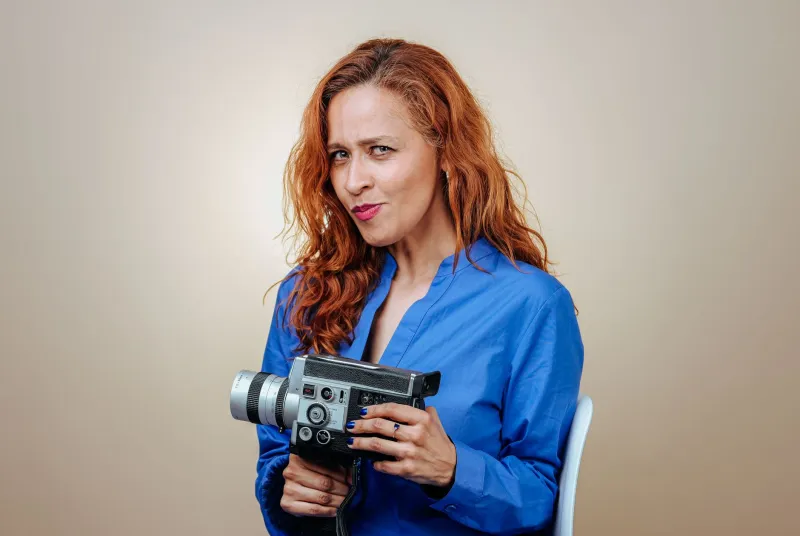
Somebody told me once that reinvention is the ultimate creative flex. And sure, on paper, it sounds like freedom — shedding an old skin, stepping into something newer and truer. What they conveniently left out is the part where you sit with a folder full of old projects at midnight, feeling like you just broke up with someone you still kind of love.
That's the thing about changing direction as a creator. It's not just a career pivot. It's a quiet, personal reckoning.
The Work You Leave Doesn't Actually Leave
Here's what nobody really prepares you for: your old work sticks around. It lives in search results, in other people's memories, in the comments sections of things you made years ago when you were a completely different version of yourself. You move on, but the internet has a long, unblinking memory.
And beyond the digital footprint, there's the internal archive — the mental catalog of everything you built before. The late nights you poured into it. The version of you that genuinely believed in it. That doesn't just evaporate because you decided to go a different direction.
For a lot of creators, that old work becomes a ghost. Not a haunting-in-a-scary-way ghost, but the kind that drifts through a room and reminds you of something you can't quite name. You see someone reference your older stuff with genuine enthusiasm, and instead of feeling proud, you feel this strange, tangled mix of gratitude and guilt. Like you're betraying them somehow by not being that person anymore.
The Guilt Is Real (And It Makes Sense)
If you built an audience around a specific thing — a style, a subject, a version of your voice — there's an unspoken contract people feel like they signed with you. And when you shift, some of them feel like you broke it. A few will say so out loud. Most won't, but you'll feel it anyway.
That's where the guilt creeps in. Not because you did something wrong, but because you genuinely care about the people who showed up for your earlier work. They weren't wrong to love it. You weren't wrong to make it. And you're not wrong to outgrow it.
Still — knowing something intellectually and feeling it emotionally are two very different experiences. You can understand that growth is necessary and still feel the sting of leaving something behind.
Nostalgia Is Sneakier Than You Think
There's another layer underneath the guilt, and it's nostalgia — not just for the work itself, but for the person you were when you made it. That era had its own texture. Its own certainties. You knew what you were doing and why, even if that version of "why" doesn't fully hold up anymore.
Looking back at old work can feel like flipping through a photo album from a chapter of your life that's closed. There's warmth there. There's also distance. And sometimes, when the new direction feels uncertain or unfinished, the old stuff starts to look deceptively comfortable. Like maybe you were fine where you were. Maybe the pivot was a mistake.
It probably wasn't. But that pull is worth acknowledging rather than bulldozing past.
The Identity Crisis Nobody Talks About
Here's the part that tends to catch creators off guard: when you change what you make, you have to renegotiate who you are — at least in the context of your work. And that's disorienting in a way that's hard to explain to people outside of creative fields.
If your work has been a significant part of how you present yourself to the world, shifting that work means shifting the story. The old narrative — the one people knew, the one you repeated in bios and interviews and casual conversations — no longer fits cleanly. You're in between versions of yourself, and that in-between space is genuinely uncomfortable.
You're not the person who made the old stuff anymore. But you're not fully the person who makes the new stuff yet, either. It's like being in the middle of a sentence and forgetting where it was going.
How to Honor It Without Getting Stuck In It
The goal isn't to pretend the old work didn't happen, or to disown it, or to quietly delete it and hope nobody notices. The goal is to hold it with some kind of grace — acknowledging what it was, what it meant, and what it taught you — without letting it become a cage.
A few things that actually help:
Name what it gave you. Before you move on, spend some real time thinking about what that era of your work built in you — skills, relationships, clarity, confidence. Articulating that, even just to yourself, makes the transition feel less like abandonment and more like graduation.
Let people grieve it too. If your audience is adjusting to a new version of your work, give them space to feel however they feel about it. You don't owe anyone an apology for evolving, but a little acknowledgment — a genuine "I know this is different" — goes a long way.
Stop apologizing for the old stuff. It's tempting, especially when your taste has shifted significantly, to cringe at or dismiss earlier work in public. Resist that. That work was real. It was yours. Throwing it under the bus to signal how much you've grown is its own kind of dishonesty.
Sit with the discomfort instead of sprinting past it. The identity in-between space is uncomfortable, but it's also generative. Some of the most interesting creative decisions happen when you're not fully anchored anywhere yet.
Moving Forward Without Erasing Where You Were
Reinvention doesn't have to be a hard line drawn in the sand. The best creative pivots usually aren't. They're more like a gradual turn — where you can trace the thread from where you started to where you ended up, even if the two points look very different on the surface.
Your old work isn't a liability. It's evidence. Evidence that you showed up, that you made things, that you were willing to put something real into the world even when you weren't sure how it would land. That's not something to outrun. It's something to carry forward — lightly, without apology, and with a little more tenderness than we usually allow ourselves.
The grief of reinvention is real. So is what's waiting on the other side of it.