What Nobody Tells You About Disappearing From the Internet
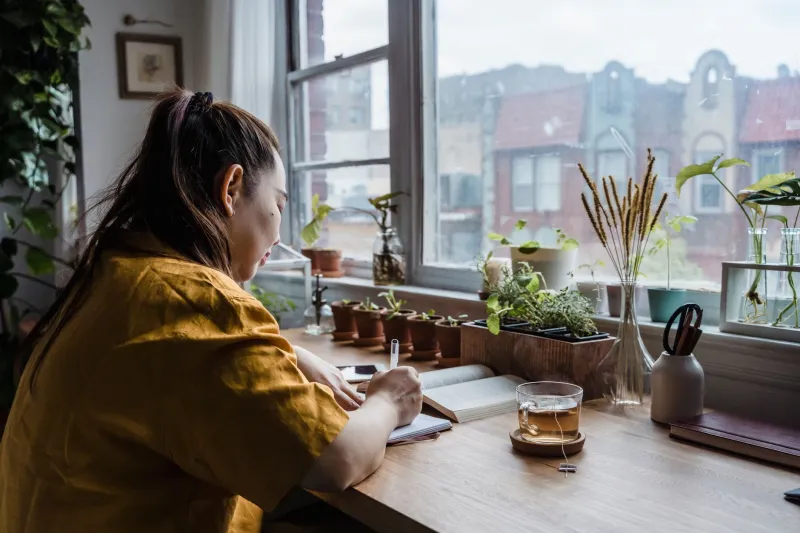
There's a specific kind of quiet that settles in when the algorithm stops caring about you. It's not dramatic. Nobody announces it. One week you're getting decent traction, people are sharing your stuff, maybe a few new followers trickle in — and then, gradually, the numbers just... flatten. The comments thin out. The views plateau. And if you're paying attention (which, let's be honest, most of us are paying way too much attention), you notice.
The first instinct is to fix it. Post more. Post differently. Study what's working for other people and reverse-engineer your way back into relevance. I've been there. I've opened analytics dashboards at midnight like they were going to hand me some kind of answer. They never do.
But here's the thing I didn't expect: the silence eventually stops feeling like failure. And when it does, something genuinely interesting starts to happen on the other side of it.
The Anxiety Is Real, and It Deserves to Be Named
Let's not gloss over this part, because I think a lot of people do and it doesn't help anyone. When you've built something — a platform, a creative practice, a body of work that people once responded to — and then you feel that audience pulling back, it stings. It can feel deeply personal even when it's not.
There's a particular American cultural pressure around visibility. We're wired to equate being seen with being valuable. Reality TV, social media, the whole influencer economy — it's all built on the premise that attention equals worth. So when the attention dips, it's hard not to internalize that as a statement about you, your work, your relevance as a person.
I want to sit with that discomfort for a second instead of rushing past it, because I think the rush to reframe it as a "gift" can sometimes be its own kind of avoidance. It's okay to feel the sting. It's okay to miss the feeling of being found.
But it's also worth asking: what were you actually missing?
When the Audience Leaves, the Performance Has to Stop
Here's what I noticed about my own creative process during a quieter stretch: I was still making things. I was writing, experimenting, putting ideas together — but without the constant background hum of how will this land? running underneath everything.
That hum is sneaky. You don't always notice it's there until it's gone. It shapes your choices in ways that are hard to track in real time. You soften an edge because you're worried it'll alienate people. You pick the safer topic. You frame something in a way that's more digestible rather than more honest. None of these feel like compromises in the moment — they feel like craft decisions. But over time, they add up.
When there's no audience to perform for, even subconsciously, you start making different decisions. Weirder ones, sometimes. More specific ones. Things that feel true to you in a way that's harder to justify to an external audience but easier to justify to yourself.
Some of my favorite things I've ever made came out of periods when I was pretty sure nobody was going to see them. That's not a coincidence.
Obscurity as a Creative Sandbox
There's a reason so many artists talk about their early work — before they had an audience — as some of their most fearless. It's not nostalgia. It's that low stakes genuinely do create a different kind of freedom.
When you're not known, you can try things and fail quietly. You can pivot without having to explain the pivot. You can experiment with a style, a format, a voice — and if it doesn't work, it just doesn't work. No public postmortem required.
This is actually a massive advantage that people in the middle of chasing relevance tend to overlook. The creative sandbox of obscurity is a real place. You can build things there that you'd never risk building in public, and sometimes those are the things that end up mattering most.
I'm not saying disappear on purpose. I'm saying that if it happens — if the spotlight moves on, if your numbers take a hit, if a platform's algorithm decides you're not its priority this season — there's something worth mining in that space before you scramble back toward visibility.
What You Learn About Your Own "Why"
The quieter periods have a way of forcing a reckoning with motivation. When you're not getting external validation, you have to figure out whether you actually want to keep going — and why.
For some people, that question reveals that the external validation was the whole point, and that's a genuinely useful thing to know about yourself. There's no shame in it. Wanting an audience, wanting recognition, wanting your work to connect with people — these are legitimate human desires. But if that's the primary engine, a stretch of low visibility is going to feel pretty unbearable.
For others, the quiet reveals something sturdier underneath. A genuine compulsion to make things, to think through ideas, to put something into the world regardless of whether anyone's watching. That's a different kind of creative fuel, and it burns longer.
I think most of us are some combination of both. We want connection and we have something internal driving us. The periods of low visibility help you see the ratio more clearly — which parts of your creative practice were built on external approval versus something that belongs to you regardless.
Coming Back Differently
Here's the paradox that I keep coming back to: the work you make during the quiet periods is often what brings people back. Not because you optimized for it, but because it has a different quality to it. It's less polished in some ways and more honest in others. People can feel the difference, even if they can't always name it.
Being forgotten — temporarily, partially, in whatever form it takes for you — has a way of stripping things back to something more essential. And when you start building again from that place, you're building on a foundation that actually belongs to you.
The spotlight is great. Connection is real and meaningful and worth working toward. But the time in between, when the comments have dried up and the metrics aren't moving and you're just sitting with your own work and your own reasons for making it? That time is doing something important.
Don't waste it trying to get back to where you were. Use it to figure out where you actually want to go.