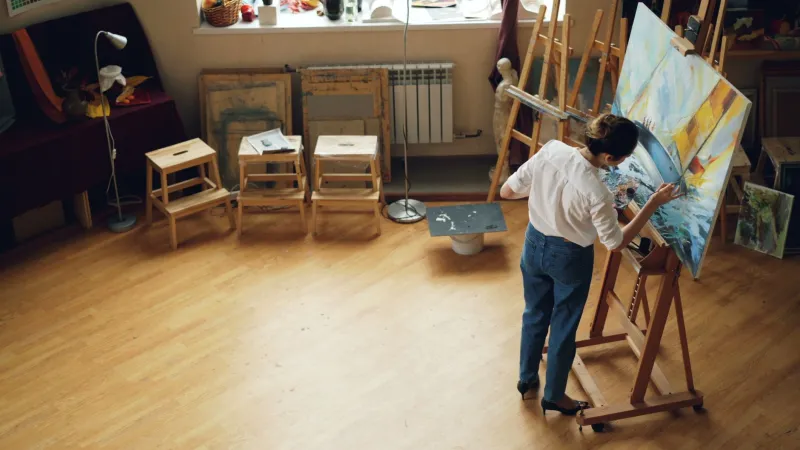
The Case for Making the Thing Nobody Saw Coming
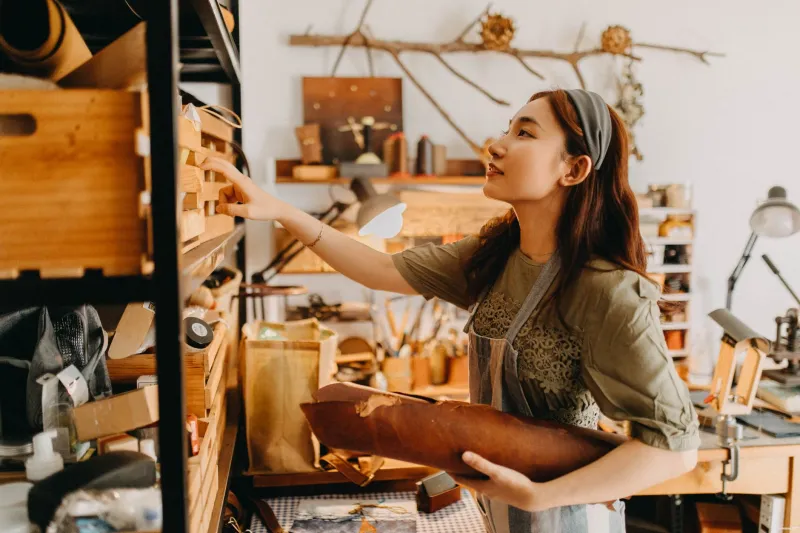
Let me paint a picture. You have an idea. It's a little weird. There's no obvious category for it, no existing audience you can point to, no comparable project you can use to pitch it to anyone. When you describe it out loud, people tilt their head slightly to the left — not dismissively, just... processing.
Every instinct shaped by years of internet logic tells you to sand it down. Make it more digestible. Find the angle that fits a niche. Figure out who it's for before you make it.
And then there's this quieter voice underneath all of that saying: just make it anyway.
That voice is worth listening to.
The Template Problem
We've built an entire creative economy around reverse-engineering what works. Study the top performers. Identify the format. Replicate the structure. Optimize the hook. There's nothing inherently wrong with any of that — understanding your craft and your audience is legitimate creative work. But somewhere along the way, "what works" became the ceiling instead of the floor.
The result is a lot of content that's competent, consistent, and completely forgettable. Not because the people making it lack talent, but because they're operating inside a framework designed to minimize risk — and minimizing risk also minimizes surprise. It minimizes the thing that makes someone stop scrolling and actually feel something.
Templates are useful until they're a cage.
What "Nobody Asked For" Actually Means
Here's a reframe worth sitting with: nobody asked for anything before it existed.
Nobody asked for a podcast about the history of competitive dog grooming. Nobody asked for a newsletter that's half personal essay, half recipe, half astrology chart breakdown (yes, that math is intentional). Nobody asked for a YouTube channel where a former civil engineer explains the structural failures in disaster movies. And yet — these things exist, they have devoted audiences, and the people who make them are doing some of the most alive creative work on the internet right now.
The audience didn't come first. The thing came first. The audience found it.
This is the part that's hard to hold onto when you're in the middle of building something and the numbers are small and the reach is limited and everyone around you seems to be doing something much more legible. But it's also the most important creative truth I keep coming back to: you cannot predict your audience into existence. You can only make the thing and let them arrive.
The Niche That Can't Be Googled
Algorithm-friendly niches have a specific shape. They're searchable, they're categorical, they answer a question someone was already asking. "Best running shoes for flat feet." "How to start a Roth IRA at 30." "Easy weeknight dinners under 30 minutes." These are real needs, and content that serves them has genuine value.
But there's another kind of niche — one that doesn't have a search term yet because nobody knew they needed it. These are the niches built around a sensibility rather than a subject. A specific way of seeing rather than a specific topic. A voice so particular that it creates its own category.
Think about creators like Hank Green, who built an audience around genuine curiosity across wildly different subjects before that was a recognized format. Or Defunctland, a YouTube channel about defunct theme park attractions that became a home for a very specific kind of nostalgic obsessive — people who didn't know they were looking for it until they found it. Or the entire genre of "extremely detailed analysis of something most people don't think about" that's quietly thriving across every platform right now.
These projects don't fit a template. They fit a person. And that specificity is exactly what makes them work.
The Commercial Uncertainty Is Real (Let's Not Pretend Otherwise)
I want to be honest here, because the "just make weird stuff and it'll work out" narrative can gloss over something real: building something unconventional is genuinely harder to monetize, at least at first. Sponsors want audiences they can categorize. Platforms favor content they can algorithmically sort. Pitching something that doesn't have a clear comp is a slog.
This is true. And it doesn't mean you shouldn't do it.
What it means is that you need a longer timeline, a more flexible definition of success, and probably a few other income streams while the thing finds its footing. It means you have to be genuinely interested in what you're making — not just in the version of it that goes viral — because you might be making it for a while before the audience catches up.
The creators who succeed with unconventional projects tend to share one trait: they were going to make the thing regardless. The audience was a bonus, not the premise.
Practical Moves for the Unconventional Builder
If you're in the middle of building something that doesn't have a roadmap, here are a few things that actually help:
Document the process publicly, even when it's messy. The behind-the-scenes of making something weird is often more interesting than the thing itself, at least initially. Let people in on the thinking.
Find the smallest possible version and make that first. You don't need to launch the full vision. You need to make one thing that captures the essence of the idea, put it in front of people, and see what happens. Iteration is faster than perfection.
Seek out the weird corners of existing platforms. Every major platform has subcultures and communities that operate completely outside the mainstream algorithm. Reddit, niche Discord servers, Substack's recommendation networks, even specific Facebook groups — these are places where unconventional work finds early advocates.
Stop trying to explain it and start letting people experience it. The pitch for something unusual is almost always worse than the thing itself. Make it easy to encounter, not easy to describe.
Find your one hundred. You don't need a mass audience to validate an unconventional project. You need a small, genuinely engaged group of people who get it completely. A hundred people who would be devastated if you stopped is worth more creatively — and often commercially — than ten thousand passive followers.
The Thing About Superpower
The word "superpower" gets thrown around a lot in creator spaces, usually in the context of productivity hacks or niche expertise. But I think there's a different kind of superpower that's less talked about: the ability to make something from your own internal logic, independent of external validation, and keep making it until it finds its place in the world.
That's not easy. It requires a tolerance for uncertainty that most platforms actively work against. It means sitting with the discomfort of not knowing if it's working, not having a clear benchmark, not being able to point to a comparable success story and say "I'm doing that."
But it also means that what you're building is genuinely yours. Not a variation on a theme. Not a slightly different take on a proven format. Something that only exists because you exist — because of the specific combination of what you've read, who you are, what you find interesting, what you can't stop thinking about.
That's the thing nobody asked for. And that's exactly why it might be the most valuable thing you make.